
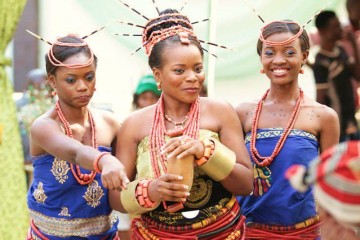
Random thoughts and questions on Igbo traditional weddings, 1 and 2

Random thoughts on Igbo traditional weddings (1) 

 How much more married can a person be, after 2 families and their friends have come together and shared a meal and drank over it, after two families have broken bread in agreement and given their children away to each other ? 

 I realize with the advent of missionaries and the gospel of Christ, certain aspects of Igbo tradition and culture had to be done away with. However, do we throw out the baby with the bath water? How is it that the closest to Hebrew marriage found in the bible has been relegated to second place in favour of a church wedding ( with all its attendant processes) ? These days young couples and their families bear the burden of paying for several weddings. I realize that there is a place for “church” but must it be as it is now? 


Some people feel that they are not married until they have had their “church wedding” , in spite of the fact that they have gone through the traditional process that is required and acknowledged by their culture. Where is the place of the black tuxedo or tail coat for and Igbo man?

Random thoughts on Igbo traditional weddings (2) : Quantum of Bride Price 

So I was speaking with my cousin who I hadn’t seen in a while and I asked what was going on with her and her husband to be, specifically about how far they had gone with regards to their wedding arrangements and she said in a tired voice “ We are making progress, they told us to bring fifty thousand naira before they give us the list. “ I was like “What ????!!!!!????” 😮 First time I had ever heard of a “pre wedding list “ fee. It seems Igbo traditional weddings are becoming even more expensive. 

My question is “Why?” 

 Some people will lay claim to tradition, others will talk about increased economic pressure in today’s world. My opinion is that old men, so called custodians of Igbo tradition have made a decision that is purely selfish in nature, to twist tradition and culture for personal gain. They have no concern for the financial strain their “decrees” have on grooms ( who are mostly young men who are not totally settled financially). Why is this allowed? Is this avarice all part of being Igbo? 

 This issue of exorbitant bride price and other related matters isn’t new. Apparently, in the old Eastern region of Nigeria, a law existed limiting the bride price to a certain amount ( Limitation of Dewey Law 1956, section 3(a))  from http://www.onlinenigeria.com/marriage/brideprice

Is greed and avarice ingrained in the Igbo psyche? Or is it a horrible stereotype that we have embraced?? Is a lorry load of yams  (amongst many other things) not excessive? A carton of skin pomade and powder, is that to start up a little shop or what??? 

Things need to change and I realize that it starts with the individual. It’s a long and hard road but it is possible.
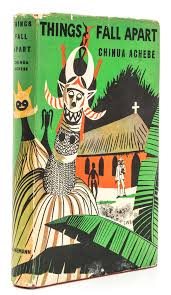


Re-reading a classic with a different set of eyes

I read “Things Fall Apart” again, in the month of April after almost two decades  I finally understood why it is such a great piece of writing and why its author is venerated. However, reading it as an adult  in this present stage of my development in thought brought certain issues to the fore : 

  • In as much as my loyalties are to the Christ and His Kingdom, I realize that the missionaries were the fore front of the war the Europeans of that time brought to the land and people of Igbo. Wittingly and/or unwittingly, they paved the way for the relentless and ruthless, utterly selfish and mercenary avarice and gluttony of the European ruling class. The gospel of Christ does not call for the decimation of a people, a change in loyalties, yes, but not a rape , a violation of a people and all the aspects of a way of life.  

It could have all happened differently , with a different effect on the land  and its peoples. Our cultural evolution , on so many levels and in so many different aspects, was catastrophically interrupted and we since have not recovered. Only in recent times has intellectual discourse begun on how, when, where to pick up the threads of our identity as a whole. 


  • Certain aspects of Igbo culture/tradition have to be restored and incorporated in a balanced manner and reintroduced to the lives of contemporary Igbo. 

Two sections of the book have captured my attention because of the profundity contained in several lines. The depth of meaning is immense, worlds and realities existent in several lines of words. 

  • Page 165 – “ Obierika who had been gazing steadily at his friend’s dangling body turned suddenly to the District Commissioner and said ferociously, “That man was one of the greatest men in Umuofia. You drove him to kill himself and now he will be buried like a dog….” He could not say any more. His voice trembled and choked his words.” The death of Okonkwo is a representation of the death of Igbo, things/ concepts that we stand for, the death of identity. Granted, Okonkwo was a very flawed man in his character, but his sense of identity was so strong  that instead of bowing to the aggressive incursion/attack on his sense of self, he removed himself in a violent manner; such an extreme act that was in itself a sign to those left in the realm of the living. The death of a way of life, the death of high concepts that were aspired to : honour, bravery, dignity, loyalty – to land, family, friends. Oh, such tragedy. 
  • Page 165 -166 – “ The Commissioner went away, taking 3 or 4 of the soldiers with him. In the many ways in which he had toiled to bring civilization to different parts of Africa he had learnt a number of things. One of them was that a District Commissioner must never attend to such undignified details as cutting down a hanged man from the tree. Such attention would give the natives a poor opinion of him. In the book which he planned to write he would stress that point. As he walked back to the court he thought about that book. Everyday brought him some new material. The story of this man who had killed himself would make interesting reading. One could almost write a whole chapter on him. Perhaps not a whole chapter but a reasonable paragraph, at any rate. There was so much else to include, and one must be firm in cutting out details. He had already chosen the title of the book, after much thought : The Pacification of the Primitive Tribes of the Lower Niger.” 

In one word “condescending”. 

All of Okonkwo’s life, its detail, its struggle, its significance brought low, clumped up into one chapter, nay, “a reasonable paragraph “ in a book describing one Caucasian’s experiences of his brutal tactics in conquering/dominating a people sophisticated in thought and ability, only different from his. 

This should never be forgotten. I do not advocate hatred towards ANY race. However, Igbo MUST NOT forget the effects of the incursion of Caucasians into her borders.

Read,Grow,Occupy

#RGO

This was originally written in my NeoIgbo journal 8th May,2014